

¿Instaló una batería solar y sigue recibiendo facturas? Esta es la verdadera razón y cómo acercarse a cero.

Una batería solar reduce su factura de SCE, pero no la elimina. Los cargos fijos, el consumo nocturno y la configuración de la batería influyen en ello. Revise los ajustes con su instalador y verifique el estado de NEM 2.0 antes de añadir equipos.
Añadiste una batería esperando que tu factura de SCE desapareciera. Sin embargo, cada mes sigues abriendo un estado de cuenta con un importe a pagar. Esto toma por sorpresa a muchos propietarios en el sur de California, especialmente a aquellos que instalaron sus sistemas bajo el Plan de Facturación Solar de NEM 3.0. Una batería es una de las herramientas más eficaces para reducir tu factura, pero nunca fue diseñada para eliminarla por completo. Aquí te explicamos qué está pasando realmente y qué puedes hacer al respecto.
Una batería solar almacena energía para que puedas usarla más tarde, pero no cambia la cantidad de energía que consume tu hogar en general ni cómo SCE estructura sus cargos. Entender cómo funciona realmente la facturación solar en California aclara mucho las cosas: incluso un sistema totalmente optimizado suele dejar un pequeño cargo mensual pendiente.
SCE aplica un cargo diario por servicio básico y, dependiendo de tu plan, tarifas fijas adicionales independientemente de cuánta energía generes o almacenes. Estos cargos existen para cubrir el mantenimiento de la red y los costos de conexión, y ninguna configuración de batería los elimina por completo. Incluso un hogar que produce y almacena energía más que suficiente para cubrir sus propias necesidades seguirá viendo este importe base en cada estado de cuenta, lo cual es normal y no es señal de que algo esté mal configurado.
Si tu batería no tiene el tamaño suficiente para cubrir todo tu consumo nocturno, o si una serie de días nublados limita la producción solar, consumirás energía de la red durante las horas más caras. Ese consumo de la red aparece en tu factura incluso con una batería instalada y funcionando correctamente. Las olas de calor en verano también suelen ser las culpables, ya que el aire acondicionado puede elevar el consumo nocturno mucho más allá de lo que una batería dimensionada para un día promedio puede manejar, dejando una diferencia notable entre lo que esperabas y lo que realmente aparece.
No todas las baterías están configuradas para enviar energía de vuelta a SCE, y eso cambia el comportamiento de tu factura.
Una configuración de batería que no exporta mantiene toda tu producción solar y energía almacenada de tu lado del medidor. No se vende nada a SCE, pero la batería tampoco puede extraer energía externa para recargarse más allá de lo que generan tus paneles. Una vez que se agota, tu hogar consume energía de la red como cualquier otro, y ese consumo se factura normalmente.
La forma en que tu batería se conecta a tu sistema también afecta este comportamiento. La diferencia entre las configuraciones de baterías acopladas en CA y en CC determina la eficiencia con la que tu sistema convierte y almacena la energía solar, lo que afecta directamente la cantidad de electricidad de la red que terminas necesitando en un día determinado.
Con el Plan de Facturación Solar, el valor de utilizar su propia energía solar de inmediato o almacenarla para después es considerablemente mayor que el de exportarla.
Las tarifas de exportación de NEM 3.0 han caído drásticamente en comparación con los créditos del antiguo NEM 2.0, lo que significa que maximizar sus ahorros ahora depende del autoconsumo en lugar de vender energía a SCE. Una batería es la herramienta que hace posible un alto nivel de autoconsumo, pero solo si se utiliza y dimensiona correctamente. Los propietarios que instalaron sus sistemas bajo las antiguas reglas favorables a la exportación a veces mantienen esa mentalidad con un sistema nuevo, esperando que los créditos por exportación hagan el trabajo pesado como solían hacerlo. Bajo las reglas actuales, el ahorro real proviene de usar o almacenar lo que usted genera en lugar de enviarlo a la red.
Incluso los hogares con energía solar sin baterías suelen llevarse una sorpresa desagradable con su declaración de ajuste anual. Si alguna vez se ha preguntado por qué su factura de ajuste de SCE es tan alta a pesar de tener paneles solares, se aplica el mismo principio fundamental: la producción y el consumo rara vez coinciden perfectamente mes a mes, y esa diferencia termina apareciendo en la factura.
Instalar una batería es solo la mitad de la ecuación. Dimensionarla y configurarla correctamente según su uso real es lo que determina si su factura se reduce a unos pocos dólares o si se mantiene obstinadamente alta.
Los consultores de US Power, con licencia CSLB, revisan sus datos de consumo real de SCE antes de recomendar el tamaño de una batería, en lugar de optar por una recomendación estándar que lo dejaría con un sistema insuficiente durante la temporada alta. Esa revisión analiza específicamente sus variaciones estacionales de consumo, no solo un promedio anual, ya que una batería que funciona bien en abril puede quedarse corta durante una ola de calor en julio si no se dimensionó teniendo en cuenta esa variabilidad.
Cada combinación de batería y panel que instala US Power utiliza equipos Qcells fabricados en EE. UU. y directos de fábrica, respaldados por una garantía integral de 25 años, lo cual es parte de la razón por la que la empresa ha obtenido más de 200 reseñas de cinco estrellas en Google por parte de propietarios del sur de California.
Su batería no funciona de forma aislada. Cuánto le ahorra realmente depende en gran medida del plan tarifario de SCE que tenga contratado.
Bajo NEM 3.0, el almacenamiento en baterías ha pasado de ser algo deseable a ser casi un requisito para los propietarios que desean ver ahorros reales, ya que la energía exportada vale mucho menos que antes.
Si usted es elegible, el plan tarifario TOU-D-PRIME de SCE está estructurado específicamente para recompensar a los propietarios de baterías que pueden desplazar su consumo fuera de la ventana de mayor demanda de 4 a 9 p. m., que es exactamente lo que hace automáticamente una batería bien dimensionada.
Una batería solar es una de las herramientas más potentes disponibles para reducir su factura de SCE, pero funciona mejor cuando se dimensiona según su uso real y se combina con el plan tarifario correcto. Entender cómo es realmente el retorno de la inversión solar en 2026 significa tener en cuenta el rendimiento real de su batería, no solo su capacidad nominal. La diferencia entre una factura que sigue siendo dolorosa y una que apenas se nota suele reducirse a obtener el dimensionamiento correcto desde el primer día.


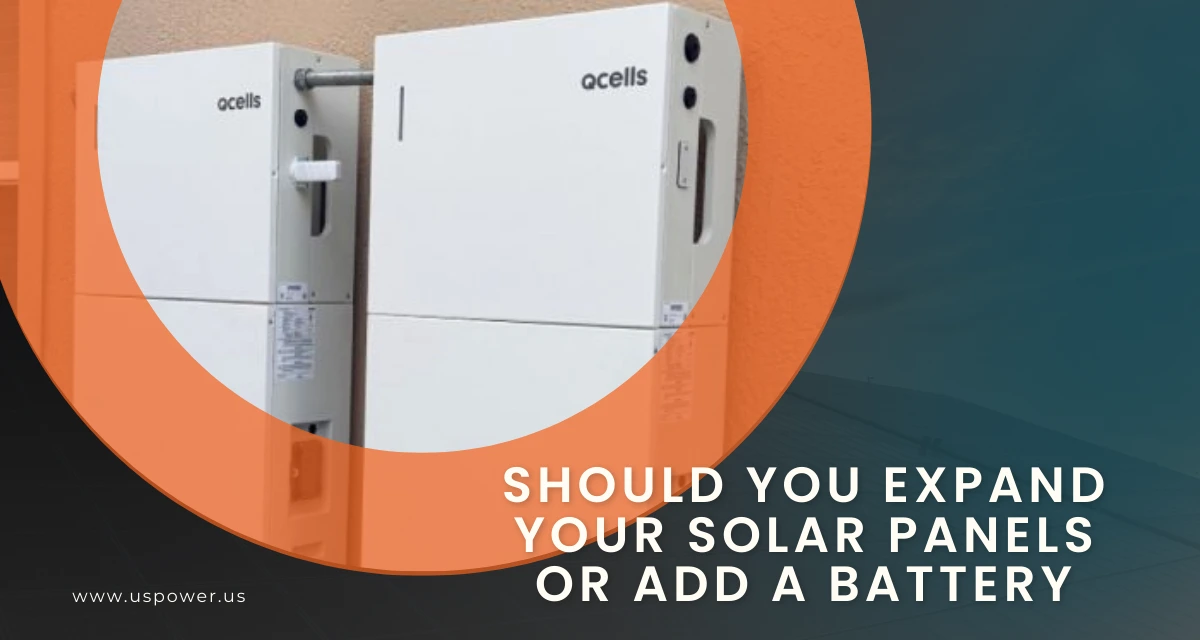
¿Paneles solares o batería? Descubre qué opción ahorra más con la configuración base.
Sus paneles solares generan energía que no aprovecha. ¡Trabaje con nosotros hoy!
¿Buscas energía de respaldo? Antes de comprar un generador o estación, lee esto.






¿Listo para tomar el control de tu energía? ¡Llámanos hoy!
818-650-8010Licencia de contratista n.º: 1144368

Copyright © 2026 US Power - Axia by QCells. Todos los derechos reservados.
¡Obtenga un presupuesto solar al instante mediante satélite!