
HDM solar financing is a pre-paid PPA: you pay once for 20 to 25 years of solar energy, with a path to ownership around Year 5 or 6. Its backer just added $800 million, but funding is not a contract. Here is how it works in California and what to ask before you sign.
HDM solar financing is a pre-paid PPA: you pay once for 20 to 25 years of solar energy, about 70% of the cost to buy, with a path to ownership around Year 5 or 6. Its backer, Maxwell Power, just added $800 million from Fairtide.
You are weighing ways to go solar, and one proposal says "pre-paid PPA." It sounds like a shortcut, but you are about to prepay for decades of power, and the pitch does not always explain who owns what, or when.
This guide explains HDM solar financing, the pre-paid PPA that US Power offers California homeowners, how it works, what the new $800 million in backer funding does and does not mean, and which questions to ask before you sign.
HDM solar financing is a pre-paid power purchase agreement (PPA) with a path to ownership. You pay once, up front, for 20 to 25 years of solar energy. The provider owns the system, keeps it maintained and claims the tax benefits, then passes part of that value to you as a lower price.
With a lease, you pay to use the equipment. With a PPA, you pay for the energy the system produces. Pre-paying means that payment is made in one lump sum, so the solar portion of your bill is $0 a month afterward, with no yearly escalator.
HDM Renewable Finance, the company behind the program, now operates as Maxwell Power and has moved its headquarters from San Diego to Salt Lake City. The program is the same one US Power offers, and the new name appears in the company's 2026 announcements.
The structure is simple once you see the order of events. You prepay, the provider claims the incentives it is eligible for, and you receive a discounted price for the energy. Your US Power consultant confirms eligibility for your address before you commit to anything.
Industry guides put the prepayment at about 70% of the cost to buy a comparable system, and describe the entry cost as 20% to 30% lower. Those two figures do not match exactly, so ask for your own quote in dollars and compare it with a cash price for the same equipment.
You can pay the prepayment in cash, or finance it with a personal loan or a home equity line of credit (HELOC). With financing, you make fixed loan payments instead of solar payments.
Because the provider owns the system, it claims the Section 48E commercial tax credit and accelerated depreciation. You never claim a credit yourself. The 30% homeowner credit expired on December 31, 2025, so these business-owned programs are now one of the main ways to capture tax value on a home system.
Industry guides describe a buyout option around Year 5 or Year 6, priced at market value. Until ownership transfers, the provider handles maintenance. After that, maintenance, repairs and insurance are yours. Get the exact date and the formula in writing.
The three routes split ownership, upfront cost and risk differently. Knowing where each one puts you makes the proposal easier to read.
When you buy, you own the system on day one, you pay the full price and you are responsible for production, repairs and insurance. With a pre-paid PPA you pay less up front, and the provider carries those responsibilities until the buyout date.
A monthly lease or PPA keeps a payment on your budget for the full term, and many include a yearly escalator. A pre-paid agreement removes the monthly solar payment and the escalator, which is the main reason homeowners with long-term plans consider it.
You still pay your utility for the power the system does not cover, plus any fixed charges. That is why a right-sized system and a clear view of your real bills matter more than any headline discount.
On October 1, 2026, Fairtide Partners committed $800 million to buy battery storage and solar projects that Maxwell Power develops, according to the PR Newswire release. It is the third commitment in a series, and it is investor capital for projects, not a payment to homeowners.
Fairtide committed $250 million in 2024 and $750 million in June 2026. With the new $800 million, the total reaches $1.8 billion. The company also reports that it helped customers lock in more than $100 million of future energy savings in 2026, and that it has invested over $1.5 billion since 2018. Those savings figures are company claims, so treat them as signals, not guarantees.
The release names no states, prices or availability terms, and it does not use the phrase "pre-paid PPA." It also does not set your contract terms. A strong investor is a good sign for the company behind your agreement, but your protection is whatever your signed contract says.
This is an illustration, not a quote. Assume a solar-plus-battery system with a $40,000 cash price, financed at an illustrative 8.99% APR over 25 years. A prepayment financed with a personal loan or HELOC would carry its own rate.
At 30% below cash, the payment drops about $100 a month against financing the full price. That gap is the whole value of a pre-paid program. A discount on a system that is too large still costs you money, so size the system first. Our guide on whether to buy or lease solar panels in 2026 covers the other ownership routes, and you can run your own usage in our solar calculator.
Prepayment is sized to what you use, so a wrong estimate means overpaying for years. Every US Power consultation starts with a real 12-month bill analysis, not a ZIP-code guess. That is how you learn whether the program fits your usage before you commit.
For most California homes, a battery is part of the answer. Under NEM 3.0, exported solar earns only a fraction of the retail rate, and peak pricing on most plans runs 4 to 9 PM, exactly when solar fades. A battery moves midday production into that window.
Industry guides say pre-paid PPAs can generally include a battery from the start or add one later, as long as its value exceeds the installation cost. Confirm the contract allows battery integration, and ask who owns and warranties it. Read our guide to solar battery storage in California and our explainer on NEM 3.0 and net billing before you size storage.
This program fits homeowners who plan to stay in the house for the long term, want predictable energy costs and prefer a lower upfront price than buying. It works best when you have cash, or access to a personal loan or HELOC, to cover the prepayment.
It is a poor fit if you may move within about five years. A sale requires following the contract's transfer steps and paying any fees. Our guide to buying a house with solar panels shows what buyers ask about, and our California solar cost breakdown helps you judge whether a quote is fair.
Ask for the earliest buyout date, the formula and who sets market value. A verbal "it will be almost free" is not a contract term.
Request the guaranteed Performance Ratio, the compensation rate per kWh if the system underproduces and how long the guarantee lasts. Our list of 5 hidden costs that can impact your California solar savings shows what proposals often leave out.
Because the release names no states, eligibility is checked by address, credit and equipment. Ask your consultant to confirm that your utility area is served before you spend time on design.
Ask for the quote in dollars, then compare it with a cash price for the same equipment. Our tips on how to negotiate a solar quote show what is worth asking about.
The program is a pre-paid PPA that trades one upfront payment for 20 to 25 years of solar energy and a path to ownership. The $800 million Fairtide commitment, now a $1.8 billion total, is encouraging news about the company behind it, but your contract still decides the outcome.
US Power's CSLB-licensed consultants pair factory-direct Qcells pricing, 15% to 20% below market, with a 25-year comprehensive warranty and a 3 to 4 week install to PTO. Every consultation starts with a real 12-month bill analysis. To see what this would look like for your home, book your free 12-month bill analysis and we will price it from your actual usage.
Big funding is a good sign, but your signed contract is the real proof.


Important solar system facts and tips from US Power for smart energy choices in 2025.

Understand typical daily electricity usage for California homes to plan solar.
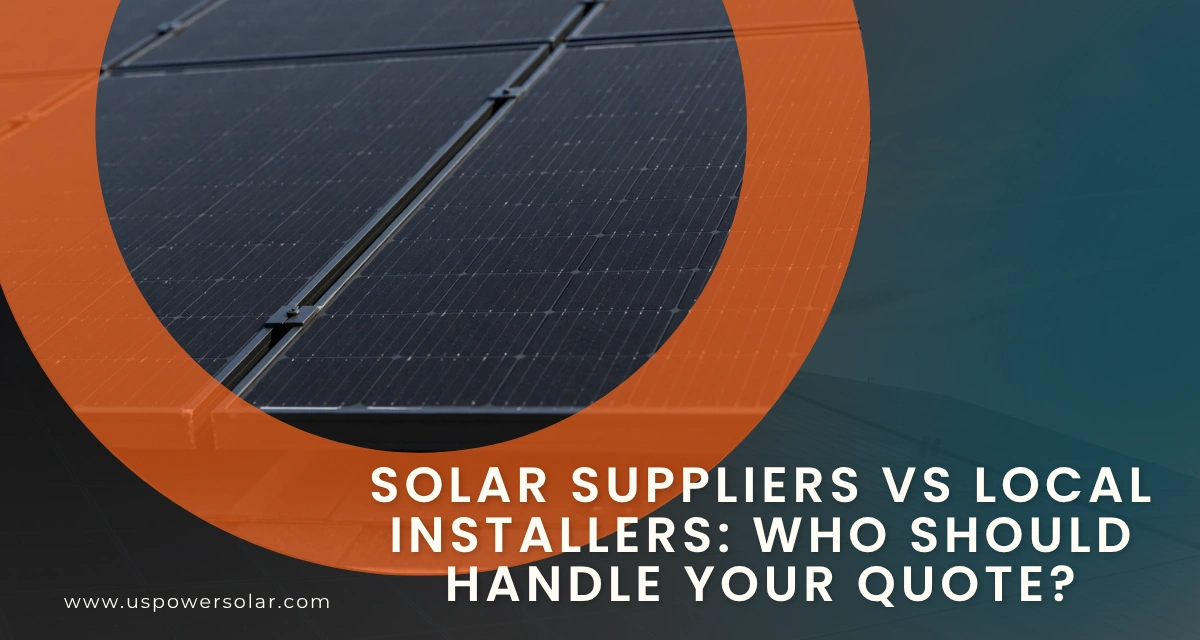
Should a solar supplier or a local installer handle your next solar system quote?






Copyright © 2026 US Power - Axia by Qcells. All Rights Reserved.
Get an instant solar estimate using satellite!