

Los paneles solares dejan de producir energía en el momento en que se pone el sol o se corta la red eléctrica, que es precisamente cuando la mayoría de los propietarios más necesitan electricidad. Esta guía compara las mejores opciones de respaldo de batería para sistemas solares Qcells, incluyendo el propio Q.HOME CORE de Qcells, Tesla Powerwall 3 y otras marcas líderes, para que pueda elegir la capacidad, el tipo de respaldo y el precio adecuados para su hogar en California, Texas, Florida o Illinois.
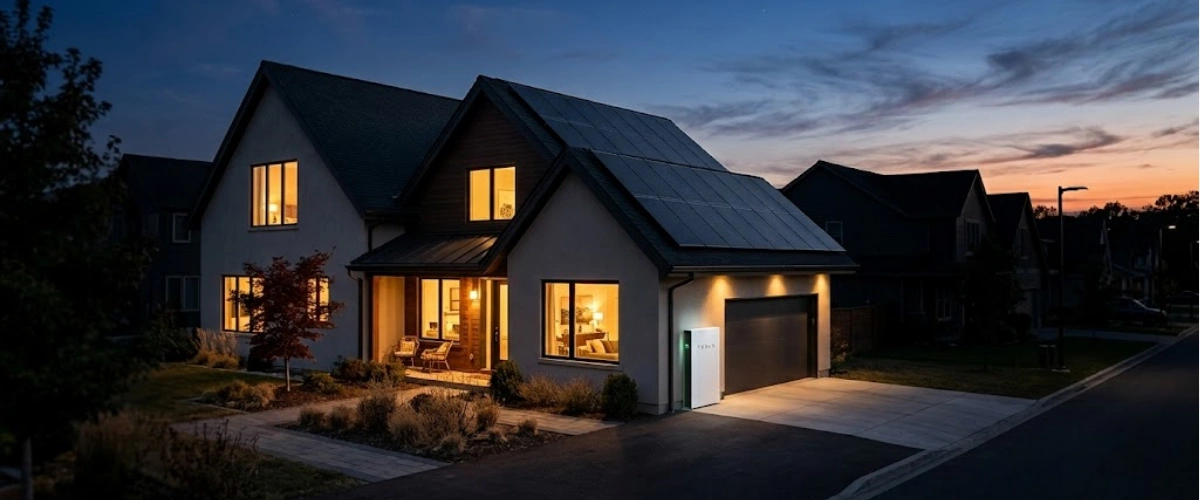
Los paneles solares se sienten como independencia, hasta que se corta la luz y los suyos también se apagan. La mayoría de los sistemas solares conectados a la red deben apagarse durante un corte por razones de seguridad, dejando su hogar tan a oscuras como el de su vecino que no tiene paneles.
Eso sorprende a muchos propietarios. Usted invirtió en energía solar específicamente para obtener más control sobre su energía, solo para descubrir que los paneles por sí solos no proporcionan energía de respaldo en los momentos exactos en que más la necesita.
Con los cortes preventivos (PSPS), las olas de calor del verano y los apagones relacionados con tormentas volviéndose más frecuentes en California, Texas, Florida e Illinois, una batería está pasando rápidamente de ser algo "bueno de tener" a ser esencial. Combinar sus paneles Qcells con la batería adecuada cierra esa brecha.
Tampoco se trata solo de los apagones. El aumento de las tarifas de los servicios públicos significa que el valor de almacenar su propia energía solar para usarla por la noche, en lugar de extraerla de la red a precios máximos, sigue aumentando cada año. Una batería le compensa dos veces: una durante un apagón y otra cada mes en su factura.
No todas las baterías están fabricadas de la misma manera, y no todos los hogares necesitan la más grande del mercado. Elegir entre el propio Q.HOME CORE de Qcells, un Tesla Powerwall 3 u otra marca líder depende del consumo de su hogar, sus objetivos de respaldo y su presupuesto.
Una batería almacena la energía solar adicional que producen sus paneles Qcells durante el día para que pueda usarla más tarde, ya sea por la noche, durante los precios máximos de los servicios públicos o en un apagón. Entender cómo funcionan realmente las baterías solares hace que sea mucho más fácil comparar opciones de forma inteligente en lugar de simplemente perseguir el número más alto en una hoja de especificaciones.
La capacidad, medida en kWh, le indica cuánta energía puede almacenar una batería. La potencia, medida en kW, le indica cuántas cosas puede hacer funcionar a la vez. Una batería con alta capacidad pero baja potencia podría hacer funcionar su refrigerador durante días, pero tener dificultades para arrancar también el compresor de su aire acondicionado.
Esta distinción confunde a muchos propietarios que comparan presupuestos lado a lado. Dos baterías pueden listar la misma capacidad en kWh y, sin embargo, funcionar de manera muy diferente durante un apagón si sus índices de potencia de salida no coinciden con los requisitos de carga reales de su hogar, especialmente para electrodomésticos con altas demandas de arranque, como bombas de pozo o aire acondicionado central.
Con los cambios en los créditos de exportación de NEM 3.0, vender el exceso de energía solar a la red es mucho menos rentable que antes. Esto hace que almacenar tu propia energía para usarla por la noche, cuando las tarifas son más altas, sea más valioso que nunca. Una batería del tamaño adecuado ya no es solo un seguro de respaldo; se ha convertido en una pieza fundamental para maximizar tus ahorros mensuales.
Aquí te mostramos cómo se comparan las baterías líderes que se integran con los sistemas solares Qcells en cuanto a capacidad, potencia de respaldo y garantía.
El sistema Q.HOME CORE de Qcells es modular y permite escalar desde unos 9 kWh hasta 20 kWh, pudiendo suministrar el 100% de la potencia nominal del inversor para respaldar las cargas que elijas durante un corte de luz. Cuenta con una garantía estándar de producto de 12 años que asegura una retención de capacidad del 70% tras 6,000 ciclos. Al ser fabricado por la misma marca que tus paneles, la instalación, el monitoreo y la garantía se gestionan bajo un mismo sistema, una sola aplicación y un único proveedor.
Para los propietarios que valoran la simplicidad, este enfoque de un solo fabricante elimina muchos de los dolores de cabeza que surgen al combinar marcas distintas. Solo hay una empresa a la que llamar si necesitas asistencia, y no tendrás que preocuparte por si una actualización de firmware en un componente afectará la compatibilidad con otro.
Muchos propietarios siguen eligiendo el sistema de respaldo Tesla Powerwall 3 o marcas como Franklin y Enphase para complementar sus paneles Qcells. Estos sistemas son totalmente compatibles y suelen elegirse por sus puntos fuertes específicos, como el ecosistema de aplicaciones integrado de Tesla o la arquitectura basada en microinversores de Enphase, que algunos propietarios prefieren por permitir el monitoreo a nivel de panel.
Es importante recordar que el rendimiento de la batería depende en parte de cuánta energía pueden enviarle realmente tus paneles. Cómo afecta la producción de los paneles a la carga de la batería es un detalle que muchos presupuestos pasan por alto, pero una relación desequilibrada entre el inversor y los paneles puede hacer que tu batería nunca se cargue tan rápido como indica su ficha técnica.
Elegir entre marcas de baterías no debería requerir que te conviertas en ingeniero eléctrico. Los técnicos de US Power están certificados en Qcells, Tesla, Enphase y otras marcas líderes en almacenamiento, por lo que recibirás una comparación honesta en lugar de una propuesta basada en lo que el instalador tenga en stock.
Como US Power no está atado a un único fabricante de baterías, nuestras recomendaciones se basan en el consumo real de tu hogar y tus objetivos de respaldo, no en qué marca ofrece la comisión más alta. Además, ofrecemos precios directos de fábrica en paneles Qcells, entre un 15% y un 20% por debajo de las tarifas habituales del mercado.
Determinar la capacidad correcta de la batería comienza por entender los patrones energéticos reales de tu hogar. Nuestro dimensionamiento de sistemas mediante IA tiene en cuenta el potencial de producción de tu techo y los datos de consumo de tu hogar para recomendarte una batería que se ajuste a tu estilo de vida real, no a un promedio genérico.
Una de las decisiones más importantes al solicitar un presupuesto de baterías es si deseas respaldar toda tu casa o solo los elementos esenciales.
El respaldo para toda la casa mantiene todo en funcionamiento durante un corte de energía, incluyendo el sistema de climatización (HVAC), los electrodomésticos y el cargador de vehículos eléctricos. Esto requiere una batería de mayor capacidad, o varias unidades conectadas entre sí, lo que conlleva una mayor inversión inicial.
Esta opción es la más lógica para hogares con equipos médicos, oficinas en casa que dependen de una energía fiable o cualquier persona que haya sufrido un corte de luz de varios días y no quiera volver a pasar por ello sin una cobertura total.
El respaldo parcial, o de cargas críticas, alimenta elementos esenciales como la refrigeración, la iluminación y los equipos médicos, dejando de lado los electrodomésticos de alto consumo. Es una opción de entrada más asequible para los propietarios que buscan principalmente tranquilidad durante cortes de luz breves.
Dependiendo de dónde viva, los reembolsos de baterías de LADWP y programas municipales o de servicios públicos similares pueden reducir significativamente lo que paga de su bolsillo por cualquiera de las configuraciones de respaldo. La disponibilidad y las cantidades varían según el territorio de la empresa de servicios públicos, por lo que vale la pena comprobar qué se aplica a su dirección específica.
Los paneles solares por sí solos no pueden mantener su hogar en funcionamiento cuando más lo necesita. Combinar su sistema Qcells con la batería adecuada, ya sea la Q.HOME CORE de Qcells o una marca externa de confianza, cierra esa brecha y le devuelve el control real.
Con el aumento de las tarifas eléctricas y la mayor frecuencia de los cortes de luz en California, Texas, Florida e Illinois, el valor de un respaldo de energía fiable aumenta cuanto más tiempo espere para instalarlo. Los propietarios que más aprovechan su sistema son los que dimensionan su batería basándose en datos de uso reales, no los que adivinan y esperan que sea suficiente cuando se apagan las luces.


Comprenda la energía CA y CC y cómo impulsa la energía solar fiable en California.
Maximize solar efficiency by choosing the right panel wiring for California homes.

Get clarity on solar panel sizes, wattage, and roof space requirements for your home.








¿Listo para tomar el control de tu energía? ¡Llámanos hoy!
818-650-8010Licencia de contratista n.º: 1144368

Copyright © 2026 US Power - Axia by QCells. Todos los derechos reservados.
¡Obtenga un presupuesto solar al instante mediante satélite!