
¿Qué harías si tu factura de luz bajara a $0.59 durante todo el mes? Eso es exactamente lo que le ocurrió a un propietario en Texas esta primavera tras instalar paneles solares. El secreto no es magia: son los créditos por excedente de generación, un sistema dimensionado correctamente y una forma más inteligente de gestionar la energía. En esta guía, analizamos cómo funciona, qué incentivos siguen vigentes en Texas en 2026 y cómo US Power ayuda a los propietarios de todo el estado a conseguir facturas cercanas a cero más rápido de lo que imaginas.
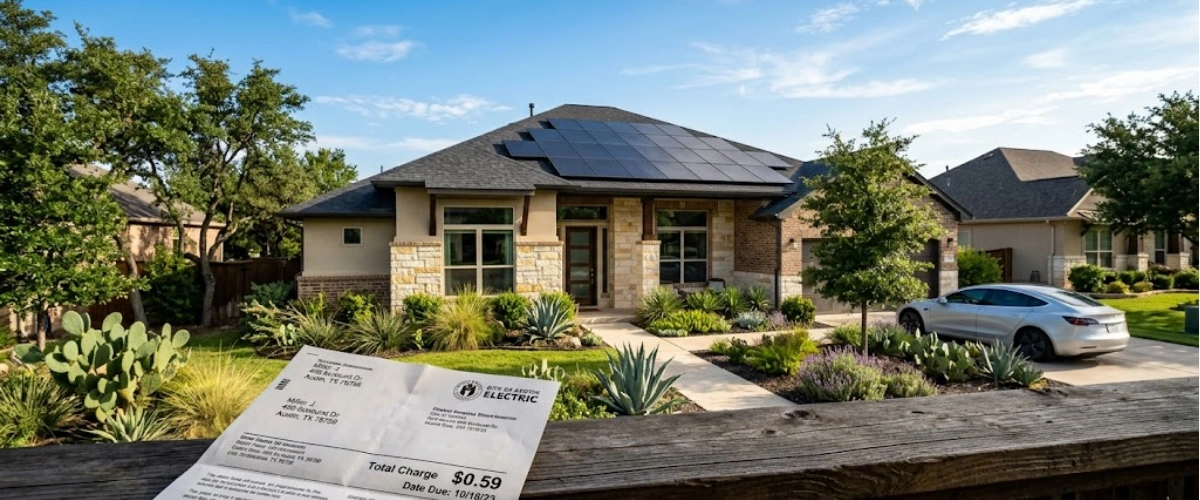
Cuando sus paneles generan más energía de la que consume, el excedente se envía a la red y su proveedor minorista le abona el importe a su tarifa de recompra. Texas no cuenta con una medición neta obligatoria, por lo que las tarifas de recompra varían según el proveedor.
Imagina abrir tu factura de luz y ver $0.59.
No es un error tipográfico. Ni un fallo de facturación. Solo cincuenta y nueve centavos por un mes entero de electricidad. Eso es exactamente lo que experimentó un propietario en Texas esta primavera tras instalar paneles solares. Y aunque tiene su gracia pagar menos por la luz de lo que costaría una hamburguesa de comida rápida de los años 80, la verdadera historia es lo que revela sobre la energía solar en 2026.
Porque esto no fue suerte. Fue el resultado de un sistema bien dimensionado, créditos por excedente de generación y una red eléctrica que, lo pretenda o no, a veces te devuelve dinero. Descubre cómo los propietarios están logrando una factura de luz cercana a cero con energía solar y qué hace falta realmente para conseguirlo.
Si eres propietario en Texas y estás cansado de ver cómo tu factura de electricidad sube cada temporada, este artículo es para ti.
Los propietarios en Texas pagan más por la electricidad que nunca. La tarifa residencial media nacional alcanzó los 18.05 centavos por kWh en abril de 2026, un 5.4% más que hace solo un año. En Texas, las tarifas varían según el proveedor, pero aumentan constantemente debido a la demanda de los centros de datos de IA, las operaciones de minería de criptomonedas y la rápida expansión industrial en todo el estado.
Si vives en el área de Dallas–Fort Worth y dependes de la red de Oncor, probablemente ya lo hayas notado. Oncor ha solicitado un aumento de tarifas que añadiría aproximadamente $7 al mes a un hogar que consume 1,000 kWh. Y es probable que no sea el último incremento que veas.
Tres fuerzas están empujando los costes de la electricidad en Texas al alza sin señales de frenar:
Descubre cuánto pueden ahorrar los paneles solares mensual y anualmente según tu factura actual; cuanto más suban las tarifas, más ahorrarás con la energía solar.
Esa factura de $0.59 de un propietario en Texas no ocurrió porque la energía solar sea magia. Ocurrió porque su sistema produjo más electricidad de la que consumieron ese mes. El exceso de energía regresó a la red y su compañía eléctrica les dio un crédito por ello, eliminando casi por completo su factura.
Esto se conoce como crédito por sobregeneración (o crédito por recompra solar). Cuando sus paneles producen más de lo que su hogar consume, su proveedor minorista de electricidad (REP, por sus siglas en inglés) le paga por ese excedente. La tarifa que pagan varía según el proveedor y el plan, por lo que elegir el REP adecuado es fundamental en un estado desregulado como Texas.
California tiene la Medición Neta de Energía (NEM 3.0), que otorga a los propietarios de sistemas solares créditos a una tarifa fija vinculada a los precios minoristas. Texas no tiene un mandato estatal de medición neta. Eso significa que su tarifa de recompra depende totalmente del REP que elija: algunos son generosos y otros no.
Esto es, en realidad, una ventaja si sabe cómo aprovecharla. Los propietarios de viviendas en Texas pueden buscar REPs específicamente para planes de recompra favorables a la energía solar, asegurando tarifas convenientes. La clave es combinar su sistema solar con el plan adecuado y, idealmente, con una batería. Aprenda exactamente cómo la energía solar y el almacenamiento en baterías trabajan juntos para maximizar lo que usted conserva.
Con una batería, la energía que producen sus paneles al mediodía no se vende a una tarifa baja, sino que se almacena y se utiliza por la noche, cuando las tarifas de la red están en su punto máximo. Así es como maximiza sus ahorros en Texas, no solo generándolos.
El crédito fiscal federal residencial del 30% para energía solar (Sección 25D) expiró el 31 de diciembre de 2025. Eso cambia los cálculos iniciales, pero no elimina la viabilidad a largo plazo de la energía solar en Texas.
Así es como se ven realmente los números para un propietario en Texas en 2026:
Históricamente, los precios de la electricidad en Texas han aumentado entre un 3% y un 5% anual. Cada vez que las tarifas suben, sus ahorros solares aumentan con ellas, porque sus paneles siguen produciendo la misma cantidad de electricidad gratuita sin importar lo que cobre la red.
¿Todavía tiene dudas? Aquí tiene un desglose detallado de por qué la energía solar sigue valiendo la pena en 2026 — incluso sin el crédito fiscal federal.
Incluso sin el crédito federal, los propietarios en Texas cuentan con protecciones y programas significativos:
Exención de impuestos sobre la propiedad: Según la Sección 11.27 del Código Fiscal de Texas, el valor añadido a su hogar por su sistema solar está 100% exento de la evaluación de impuestos sobre la propiedad. En un sistema de $23,500 que añade $20,000 al valor de la vivienda, esto supone un ahorro de aproximadamente $400 a $600 al año, dependiendo de su condado, lo que suma hasta $13,000 en 25 años.
Reembolso de ONCOR (Área de DFW): Si se encuentra en el territorio de servicio de Oncor, puede calificar para hasta $9,000 en reembolsos por un sistema solar con almacenamiento que cumpla con los requisitos. La condición: se requiere almacenamiento en batería. Los sistemas solo solares no califican. El programa funciona anualmente de enero a noviembre, o hasta que se agoten los fondos, lo que ocurra primero.
Reembolso de Austin Energy: Los propietarios en Austin pueden acceder a un reembolso de $2,500 más la Tarifa de Valor Solar (Value of Solar Tariff), que paga 9.91 centavos por kWh por toda la energía que generan sus paneles.
Reembolso de AEP Texas: Los clientes de AEP en el oeste y sur de Texas pueden acceder a hasta $3,000 en reembolsos para sistemas que cumplan con los requisitos.
Entender si te conviene comprar o arrendar tus paneles solares es una de las primeras decisiones que deberás tomar, y tiene un gran impacto en los incentivos a los que puedes acceder.
La mayoría de las empresas de energía solar compran paneles a través de distribuidores, añadiendo márgenes de beneficio en cada paso. US Power es socio exclusivo de QCells, lo que significa que los paneles provienen directamente del fabricante, generalmente entre un 15 y un 20% por debajo de lo que pagarías a través de otros instaladores.
Los paneles QCells son de fabricación estadounidense, construidos en Georgia, y tienen fama de ofrecer un rendimiento superior en climas de mucho calor como el de Texas. Cuando las temperaturas de agosto superan los 100°F y tu sistema trabaja al máximo, la calidad de tus paneles es fundamental. Los paneles importados más baratos suelen perder eficiencia más rápido bajo el estrés del calor extremo. Los paneles QCells están diseñados para mantener su rendimiento.
Una de las quejas más comunes de los propietarios de viviendas en Texas sobre la energía solar es la espera. Algunas empresas estiman de 3 a 6 meses desde el contrato hasta el permiso para operar (PTO). El tiempo promedio de instalación de US Power es de 3 a 4 semanas después de la aprobación, uno de los más rápidos de la industria.
Eso es importante ahora mismo, porque el reembolso de ONCOR finaliza el 30 de noviembre de 2026. Si esperas demasiado para comenzar, podrías perder la ventana de financiamiento.
Mira cómo funciona realmente la instalación solar desde el contrato hasta el PTO para que sepas exactamente qué esperar.
Un sistema solar no solo reduce tu factura mensual, sino que aumenta el valor de tu propiedad. Los estudios demuestran constantemente que los sistemas solares propios añaden aproximadamente un 4% al valor de reventa de una vivienda. En un mercado como el de Texas, donde los valores inmobiliarios ya son significativos, eso representa un retorno importante además de tus ahorros en energía.
Y gracias a la exención de impuestos sobre la propiedad en Texas, ese valor añadido no aumenta tu factura de impuestos. Conservas el aumento de capital en su totalidad. Descubre más sobre cómo los paneles solares aumentan el valor de tu hogar y qué significa eso al momento de la reventa.
La tormenta invernal Uri. Las olas de calor del verano. Los eventos de estrés de ERCOT. Los propietarios en Texas saben mejor que nadie que la red eléctrica no siempre es confiable. Un sistema solar con batería mantiene tus luces, aire acondicionado y refrigerador funcionando cuando la red falla.
Aquí es donde la estructura de reembolsos de ONCOR empieza a tener mucho sentido. La empresa de servicios públicos incentiva el almacenamiento en baterías porque ayuda a estabilizar la red, y tú te beneficias tanto del reembolso como de la energía de respaldo.
Antes de reunirte con un consultor solar, es útil reunir algunos documentos: tus facturas de electricidad de los últimos 12 meses, una idea aproximada de tu consumo mensual en kWh y cualquier pregunta sobre financiamiento. Revisa qué buscar en una cotización solar para que puedas comparar opciones de manera justa cuando recibas varias ofertas.
Las consultas de US Power son gratuitas, ya sean virtuales o presenciales, y no hay presión para firmar nada. Un consultor autorizado analizará contigo tu consumo específico, el tamaño de sistema adecuado para tu hogar y qué incentivos de Texas se aplican a tu situación.
Si te encuentras en el territorio de Oncor en DFW, el tiempo para el reembolso se agota. El programa está vigente hasta el 30 de noviembre de 2026 o hasta que se agoten los fondos, lo que ocurra primero. En años anteriores, los programas populares se han agotado mucho antes de la fecha límite. Empezar ahora te da la mejor oportunidad de asegurar ese reembolso antes de que desaparezca.
Incluso si estás fuera del territorio de Oncor, las tarifas eléctricas no van a bajar. Cada mes que esperas es otro mes de pagos de facturas que podrían haberse destinado a una inversión de tu propiedad.
Esa factura de luz de $0.59 no fue un accidente. Fue el resultado de un propietario que tomó una decisión, instaló un sistema solar del tamaño adecuado y dejó que sus paneles hicieran el trabajo. El crédito por sobregeneración prácticamente eliminó su factura.
Las tarifas en Texas están subiendo. La ventana de reembolso de ONCOR se está cerrando. Y cada mes que esperas es otro mes de costos de electricidad que no tienes por qué pagar.
US Power hace que el proceso sea sencillo: paneles QCells fabricados en EE. UU., precios directos de fábrica, una garantía integral de 25 años y un plazo de instalación de 3 a 4 semanas. Más de 200 reseñas de cinco estrellas en Google lo respaldan.
Tu momento de $0.59 te está esperando. La pregunta es cuándo vas a empezar.



Evita el alza del 10% de SCE con energía solar de US Power y tecnología Qcells.

Tu guía completa de 2025 sobre sistemas solares de 2kW en el sur de California.

Tus paneles solares valen el doble si dejas de vender energía a SCE. ¡Aprovéchalo!







¿Listo para tomar el control de tu energía? ¡Llámanos hoy!
818-650-8010Licencia de contratista n.º: 1144368

Copyright © 2026 US Power - Axia by QCells. Todos los derechos reservados.
¡Obtenga un presupuesto solar al instante mediante satélite!