

SCE ofrece tres planes tarifarios de uso según el horario, y elegir el incorrecto puede costarle cientos al año. Aquí explicamos qué es TOU-D-PRIME y cómo elegir.
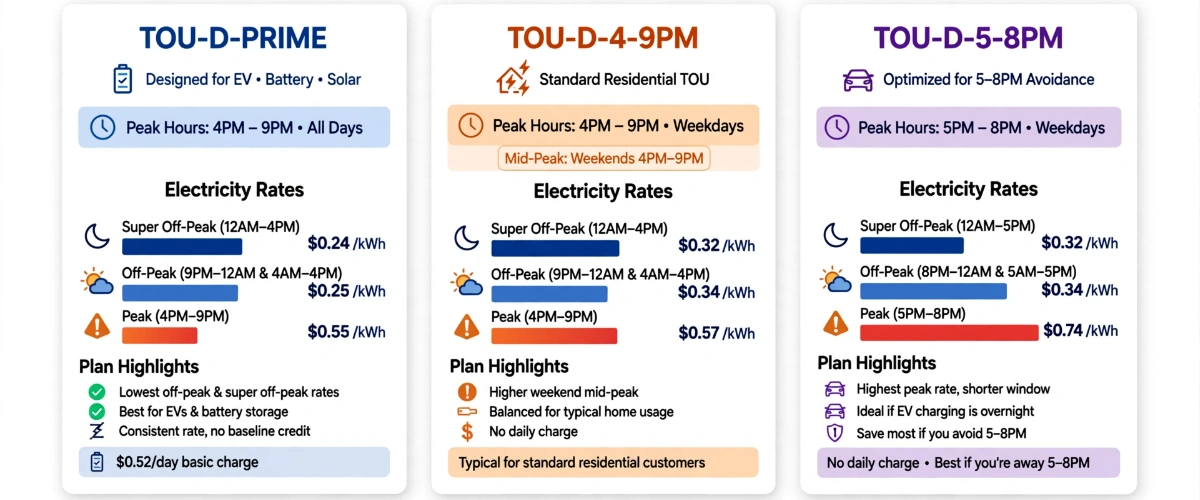
TOU-D-PRIME es el plan residencial de uso según el horario de SCE diseñado para clientes con un VE, batería o bomba de calor eléctrica. Elegir el plan incorrecto puede costarle dinero, así que compárelo con las otras opciones.
Entra en su cuenta de SCE para cambiar de plan tarifario y se encuentra con tres nombres desconocidos: TOU-D-4-9PM, TOU-D-5-8PM y TOU-D-PRIME. No hay ninguna explicación sobre cuál se adapta a su hogar, solo un menú desplegable y una decisión que afectará a su factura durante el próximo año. Si elige el incorrecto, podría terminar pagando tarifas de hora punta durante momentos en los que ni siquiera consume mucha energía. Esta guía detalla qué significa realmente cada plan, quién cumple los requisitos para TOU-D-PRIME y cómo encontrar sus horas más económicas.
SCE ha trasladado a casi todos los clientes residenciales a algún tipo de facturación basada en el uso según el horario, donde su tarifa depende de cuándo consume electricidad en lugar de cuánto consume. Las tarifas han subido drásticamente durante la última década, y los nombres de los planes no son nada claros. Los propietarios se quedan adivinando si una ventana de hora punta a las 4 p. m. o a las 5 p. m. realmente afecta a su hogar.
La mayoría de los clientes residenciales pueden elegir entre TOU-D-4-9PM, TOU-D-5-8PM y TOU-D-PRIME. Los tres cobran más durante una ventana de hora punta definida y menos durante la noche y el mediodía. La diferencia radica en la duración de esa ventana de hora punta, el importe del cargo fijo diario y si recibe o no un crédito por uso básico.
Si instaló paneles solares después de abril de 2023, es probable que esté en el Plan de Facturación Solar en lugar del antiguo NEM 2.0. Los clientes del Plan de Facturación Solar deben estar específicamente en TOU-D-PRIME, no en los otros dos planes. Esa regla explica gran parte de la confusión que experimentan los propietarios después de añadir energía solar a un sistema NEM 2.0 existente o realizar una instalación por primera vez en 2026.
Estos dos planes comparten la misma estructura básica. Las tarifas son más altas durante una ventana de hora punta definida los días laborables, bajan durante un periodo intermedio más corto y caen a su punto más bajo durante la noche y la madrugada. El número en el nombre del plan le indica exactamente cuándo comienzan y terminan las horas costosas.
TOU-D-4-9PM establece precios de hora punta de 4 p. m. a 9 p. m. todos los días. Es el plan en el que la mayoría de los clientes de SCE sin energía solar terminan por defecto, e incluye un crédito básico: un descuento por kilovatio-hora aplicado al consumo que se encuentra dentro de la asignación de uso mensual de su hogar. Ese crédito puede reducir significativamente su factura si su hogar se mantiene cerca de su consumo asignado.
TOU-D-5-8PM reduce la ventana de hora punta a solo de cinco a ocho de la tarde, pero la contrapartida es una tarifa de hora punta notablemente más alta en los días laborables de verano para compensar la ventana más corta. Este plan suele funcionar mejor para los hogares que realmente pueden evitar el uso de electrodomésticos grandes entre las 5 y las 8 p. m. Si la cena, la lavandería y el uso del aire acondicionado coinciden habitualmente con esa ventana, el plan estándar de 4-9 p. m. suele ser la opción más segura.
TOU-D-PRIME utiliza la misma franja horaria punta de 16:00 a 21:00 que TOU-D-4-9PM, pero su estructura de precios es diferente. Elimina por completo el crédito base, aplica una tarifa diaria de servicio básico más alta y, a cambio, ofrece tarifas por kilovatio-hora más bajas en todos los niveles.
Perder el crédito base puede parecer una desventaja, y para los hogares con un consumo muy bajo, puede serlo. Sin embargo, los precios más bajos por kWh suelen compensar en hogares que consumen más electricidad que la media, lo que incluye a la mayoría de los hogares con energía solar y vehículos eléctricos que consumen energía fuera de las horas punta.
TOU-D-PRIME no está abierto a todo el mundo. SCE requiere una declaración jurada que confirme que usted tiene un vehículo eléctrico, una batería residencial o un sistema de bomba de calor eléctrica antes de poder inscribirse. Esto es intencionado: SCE diseñó este plan pensando en hogares que pueden desplazar una parte significativa de su consumo fuera de la franja de 16:00 a 21:00, que es precisamente para lo que sirven los vehículos eléctricos y las baterías.
Independientemente del plan que tenga, el patrón es el mismo: las tarifas son más bajas durante la noche y a mitad del día, y más altas durante la franja horaria punta específica de su plan.
Con TOU-D-PRIME, las horas más baratas se sitúan desde última hora de la mañana hasta media tarde en los meses de invierno, y durante toda la noche durante el resto del año. Esta es la franja en la que la producción solar y la demanda de la red coinciden menos, por lo que SCE ofrece los precios más bajos para fomentar el consumo en ese periodo. Poner el lavavajillas, cargar el vehículo eléctrico o activar la depuradora de la piscina durante estas horas puede reducir significativamente su factura sin necesidad de cambiar sus hábitos, solo ajustando los horarios.
No necesita una batería para beneficiarse de las tarifas fuera de punta, pero sí necesita disciplina. Programar el lavavajillas, la lavadora y el cargador del vehículo eléctrico con temporizadores de inicio diferido es una forma sencilla de trasladar el consumo a las horas más baratas sin cambiar apenas su rutina diaria. Una batería elimina cualquier incertidumbre al automatizar este desplazamiento, cargándose durante las horas baratas y descargándose durante la franja punta, razón por la cual los hogares equipados con baterías superan sistemáticamente a los que solo tienen energía solar en los planes de uso horario de SCE. Los hogares que solo cuentan con energía solar también pueden beneficiarse, pero están limitados a lo que pueden consumir o exportar en tiempo real durante las horas de luz, lo cual rara vez coincide con la franja punta de la tarde para la que están diseñados estos planes.
Elegir un plan tarifario no debería ser una adivinanza, ni tampoco un detalle secundario añadido a un presupuesto de energía solar.
Los consultores de US Power, con licencia CSLB, revisan su historial de consumo real antes de recomendar el tamaño del sistema o un plan tarifario. Esto significa que no tendrá que elegir a ciegas entre TOU-D-4-9PM, TOU-D-5-8PM o TOU-D-PRIME. Elegirá basándose en las cifras reales de su hogar, no en una recomendación genérica que ignora cómo utiliza realmente la electricidad su familia a lo largo del día. Este mismo proceso de revisión se aplica tanto si es un nuevo cliente de energía solar como si es un propietario que simplemente intenta entender un plan al que SCE ya le ha cambiado.
Cada sistema que instala US Power utiliza paneles Qcells de fabricación estadounidense, directos de fábrica y respaldados por una garantía integral de 25 años, dimensionados específicamente para ofrecer un rendimiento óptimo bajo el plan de SCE que mejor se adapte a su hogar. Esa es parte de la razón por la que US Power ha obtenido más de 200 reseñas de cinco estrellas en Google en todo el sur de California.
Una vez que se cambia a TOU-D-PRIME, el plan prácticamente le recompensa por tener una batería.
Una batería con la capacidad adecuada se descarga durante toda la ventana de demanda máxima de la tarde, por lo que las horas más caras de su factura de SCE nunca afectan su consumo de la red. Combinado con paneles solares y almacenamiento en baterías dimensionados para hogares de California, esto puede convertir las tarifas más bajas sin cargo base de TOU-D-PRIME en una verdadera ventaja de ahorro en lugar de un compromiso.
Más allá del ahorro en la factura, inscribir su batería en un programa de central eléctrica virtual puede generar ingresos adicionales al permitir que SCE utilice su energía almacenada durante eventos de estrés en la red, además de lo que ya le ahorra TOU-D-PRIME.
El mejor plan tarifario de SCE para su hogar depende de cuánto consume, cuándo lo hace y si cuenta con una batería. Entender su período real de recuperación de la inversión solar significa tener en cuenta su plan tarifario desde el primer día, no hacer ajustes después. Dado que las tarifas de SCE no muestran signos de desaceleración, tomar la decisión correcta ahora protegerá su factura durante los próximos años.



¿Pueden las empresas solares cambiar su diseño tras firmar? Aquí está la verdad.

¿Más paneles de los que admite su inversor? Quizás ese sea el plan previsto.
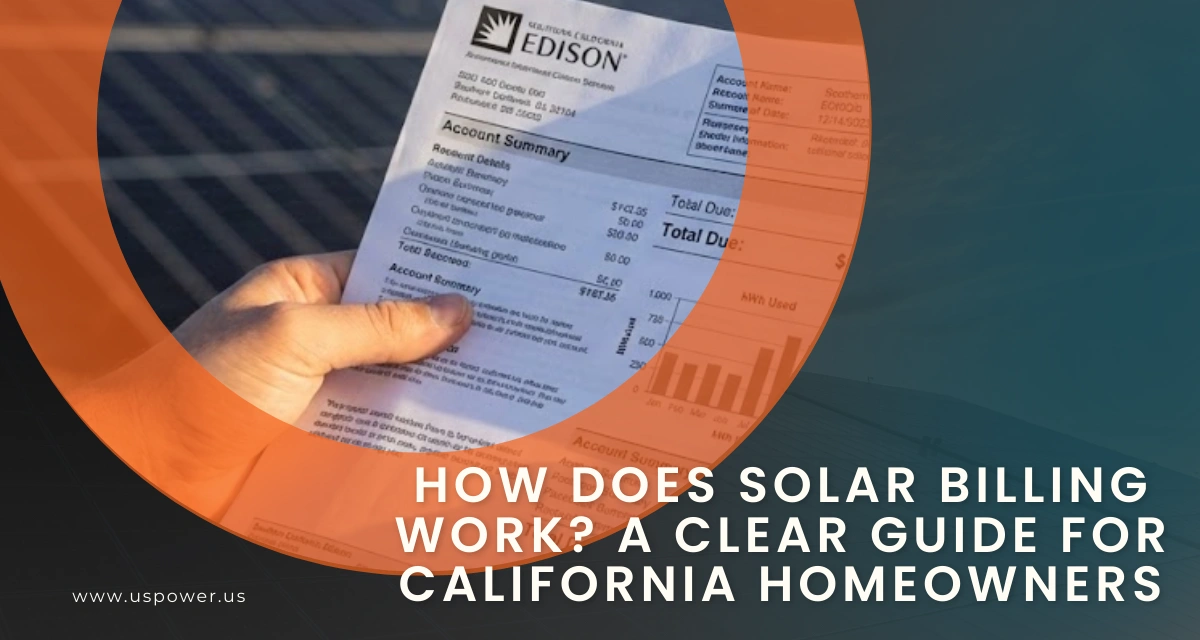
La energía solar prometía facturas de $0. ¿Por qué le siguen cobrando entonces?







¿Listo para tomar el control de tu energía? ¡Llámanos hoy!
818-650-8010Licencia de contratista n.º: 1144368
Copyright © 2026 US Power - Axia by QCells. Todos los derechos reservados.
¡Obtenga un presupuesto solar al instante mediante satélite!